Integrity, Transparency Key to Strong Institutions: Dr Satyajit Nayak
IGP Central Range addresses Vigilance Awareness Drive–2026 at IFFCO, Paradip

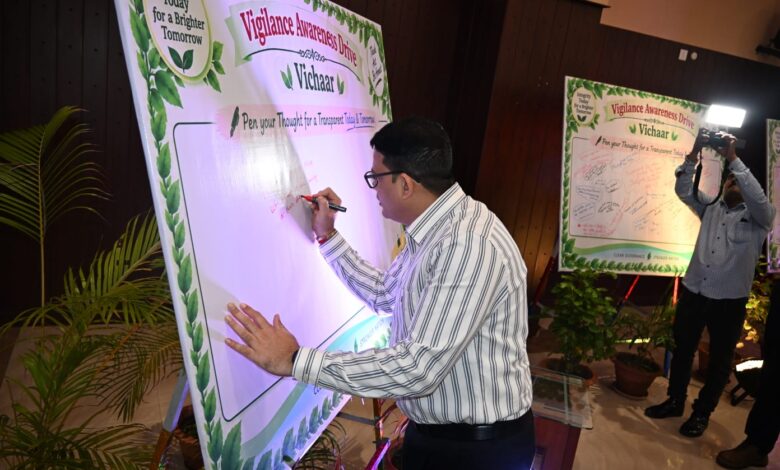
Paradip, October 28 Integrity, transparency and accountability are essential for building strong institutions and strengthening public trust, said Dr Satyajit Nayak, IPS, Inspector General of Police (IGP), Central Range, Cuttack, while addressing the concluding ceremony of Vigilance Awareness Drive–2026 at IFFCO, Paradip, as the chief guest.
Emphasising the theme, “Integrity for a Stronger, Brighter Tomorrow”, Dr Nayak said integrity was not merely a value to be professed but a principle that must guide every decision and action in professional and personal life. True integrity, he observed, meant doing the right thing even when nobody was watching. It involved not only abstaining from corruption but also discharging one’s duties with honesty, impartiality and a strong sense of responsibility.
Congratulating the IFFCO management and its Vigilance Department for organising the awareness drive, he underlined the importance of ethical conduct in an institution whose work was closely linked to farmers, agricultural production and the country’s food security. Transparency and honesty within such institutions, he said, ultimately benefited farmers and contributed to national development.
Vigilance a collective responsibility
Dr Nayak said vigilance should not be viewed as the exclusive responsibility of the Vigilance Department. Every officer and employee had a role in preventing corruption and promoting an ethical work culture. He identified prevention, participation and punishment as three important dimensions of vigilance, stressing that corruption must be prevented before it occurs, employees must actively participate in maintaining integrity, and violations must invite appropriate action in accordance with established rules.
He called for a workplace culture in which rules were applied uniformly, decisions were based on fairness and transparency, and unethical practices found no encouragement. Effective vigilance, he said, required not only action against wrongdoing but also systems capable of identifying and eliminating opportunities for corruption.
Highlighting the importance of transparency and accountability, the IGP said processes such as procurement, tendering, financial transactions and contract management must strictly adhere to established procedures. Digital technology, electronic records and e-procurement could improve efficiency and transparency, but technology alone could not guarantee fairness.
“Technology can improve efficiency, but only integrity can ensure fairness,” he observed, stressing that ethical values must remain at the centre of institutional decision-making.
Leadership must set an example
Dr Nayak said an organisation’s ethical culture began with its leadership but could be sustained only when every employee demonstrated commitment to integrity. Leaders must set an example through their conduct, while employees must ensure that their decisions were not influenced by personal interests, undue pressure or the prospect of improper benefits.
He noted that the real test of integrity came when an individual was confronted with pressure to act against established rules or ethical principles. Refusing an improper favour, rejecting undue benefits and standing by the rules despite external pressure were marks of moral courage.
He also emphasised the need to create a work environment in which employees could raise genuine concerns through appropriate channels without fear, and where complaints were examined fairly and impartially.
Lessons from policing
Drawing upon his experience in the police service, Dr Nayak said public trust was the greatest strength of any institution. Fairness, transparency, accountability and public service were fundamental principles of policing and equally relevant to professional conduct in other organisations.
A police officer, he said, was expected to enforce the law without fear or favour. The same commitment to impartiality and responsibility should guide every officer and employee in the discharge of professional duties.
Rules and regulations were necessary, but they could not eliminate corruption on their own. Strong institutional mechanisms had to be supported by honest leadership, personal integrity and ethical commitment.
“Strong systems, honest leadership and responsible employees are the strongest safeguards against corruption,” he said.
Integrity essential for nation-building
Dr Nayak said India’s aspiration to become a developed and self-reliant nation required not only economic progress but also strong, transparent and trustworthy institutions.
Corruption led to the misuse of resources, undermined equal opportunities and weakened public confidence, whereas integrity improved efficiency, ensured the proper utilisation of resources and strengthened institutional credibility.
He pointed out that every employee at IFFCO contributed not only to the organisation’s growth but also to the wider interests of the agricultural sector and the welfare of farmers through honest and responsible work.
“When individuals are honest, institutions become stronger; when institutions are stronger, the nation progresses,” he said.
**Five commitments for a brighter future**
At the conclusion of his address, Dr Nayak urged employees to make five commitments: honesty in all circumstances, transparency in decisions and processes, accountability for actions, prevention of corruption through timely intervention, and collective responsibility for creating an ethical workplace.
He stressed that these commitments should not remain confined to an awareness campaign or a formal ceremony but should become an integral part of everyday professional and personal life.
“A strong institution is built on competence, sustained by transparency, and distinguished by integrity,” he said, adding that integrity was not merely a value to be professed but a legacy to be created for future generations.
Dr Nayak reiterated his congratulations to the IFFCO management and Vigilance Department for organising the campaign and called upon all employees to uphold vigilance, honesty, transparency and accountability throughout their professional and personal lives.
He concluded with an appeal to collectively build a stronger, more transparent and corruption-free India, in keeping with the message of the campaign: “Integrity for a Stronger, Brighter Tomorrow.”